
Classic Pot Roast Recipe - Tender & Cozy
30-MINUTE MEALS! Get the email series now
Royal Recipe

Classic Pot Roast

5 from 1 vote
1 Comments
Hannah Elizabeth
By: Hannah ElizabethUpdated: Mar 20, 2026
This post may contain affiliate links. Please read our disclosure policy.

A deeply savory oven-braised chuck roast with a glossy gravy and tender vegetables — the perfect centerpiece for a cozy family dinner.

Classic Pot Roast
This pot roast has been the centerpiece of many Sunday dinners in my family for years, and it remains the dish I turn to when I want something unfussy yet impressive. I first developed this version during a rainy weekend when I had a large chuck roast and a pantry full of basics. The long, slow braise transforms a humble cut into melt-apart meat surrounded by a rich, glossy sauce and perfectly cooked root vegetables. The smell that fills the house while it braises—red wine, roasted onions, thyme and beef—has a way of gathering everyone to the table. What makes this version special is the careful layering: a dry-age step in the fridge for concentrated flavor, a strong sear for deep Maillard notes, and a finish with beurre manié to create a velvety gravy. Texturally, the roast should pull apart with little resistance while the vegetables stay tender yet intact. I remember serving this at a small celebration and watching my niece take two helpings of the rutabaga because she loved the caramelized edges. That kind of happy, slightly surprised reaction is why I keep refining this approach.

Why You'll Love This Recipe

  • This comes together with pantry-friendly staples—beef stock, tomato paste and basic aromatics—yet yields deep, restaurant-style flavor that tastes like it simmered all day.
  • Plan-ahead friendly: the beef can rest uncovered in the fridge for 12 to 48 hours to concentrate flavor and dry the surface for a better sear.
  • Hands-off braise: after an initial sear and stovetop work, the oven does the slow cooking while you prepare sides or relax with guests—ready in about 3 1/2 to 4 hours of oven time.
  • Vegetable-forward: add potatoes, carrots, celery and rutabaga toward the end so they finish alongside the roast and absorb the braising juices without becoming mushy.
  • Flexible finish: a simple beurre manié creates a glossy gravy; finish with a splash of red wine vinegar and Worcestershire sauce to balance richness.

I’ve made this for quiet family nights and holiday crowds; each time the reaction is the same—contented silence followed by requests for seconds. The method is forgiving but rewards attention to small details like the browning and the final seasoning adjustments.
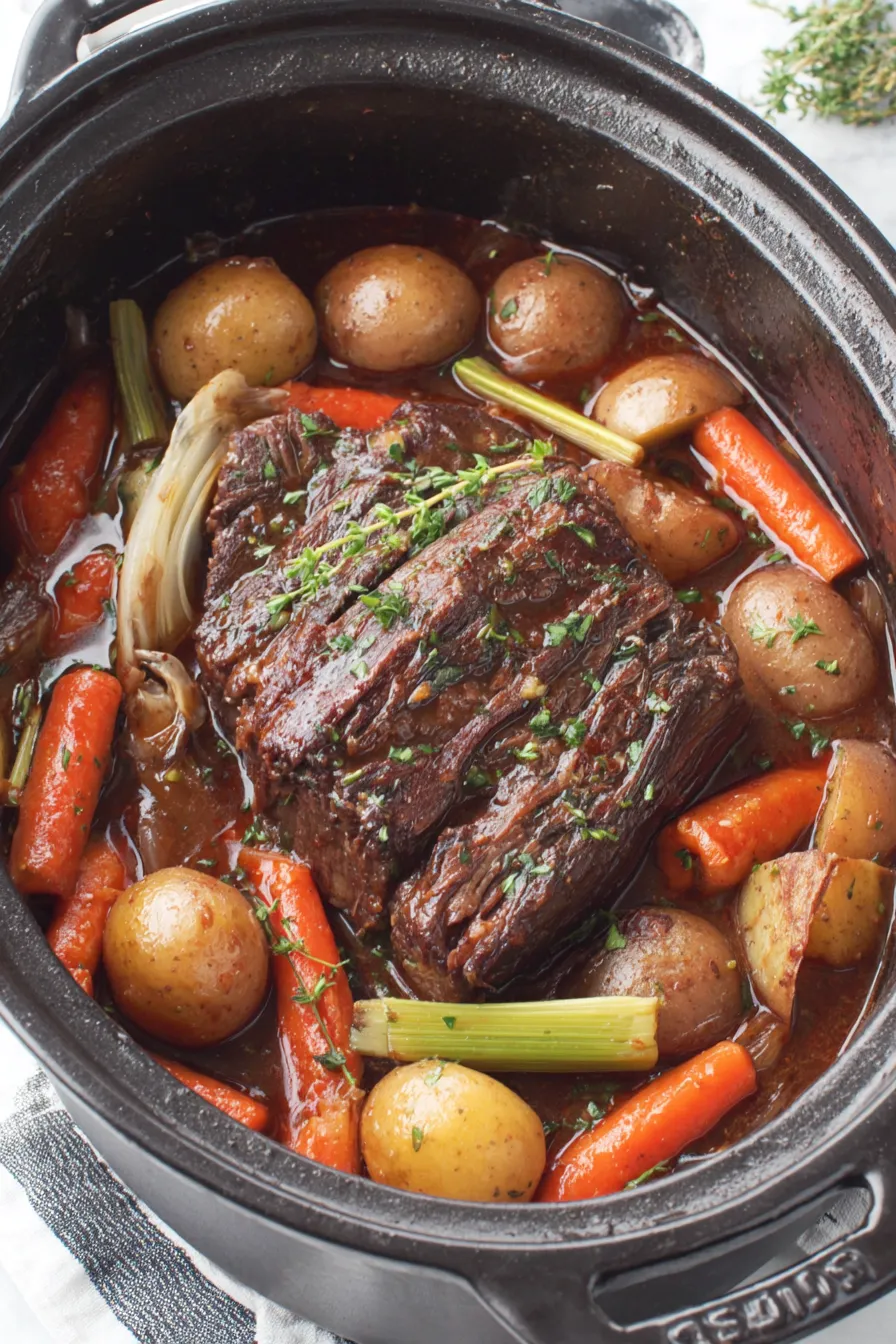
Ingredients

  • Beef chuck roast (3 1/2 to 4 lb): Choose a well-marbled chuck with even thickness so it braises uniformly; the fat renders and keeps the meat moist. I like meat from the butcher counter for freshness.
  • Olive oil (2 tbsp): Use a neutral extra-virgin for searing; it should lightly smoke before the roast goes in to ensure a proper crust.
  • Yellow onion (1, peeled, julienned): Browning the onions until deeply caramelized adds intense savory-sweetness to the braising liquid.
  • Leeks (2, white and pale yellow only): Rinse thoroughly to remove grit; they add a gentle, sweet onion flavor that complements the yellow onion.
  • Garlic (6 cloves, thinly sliced): Adds fragrant aroma; slice thin so it melts into the sauce during sautéing.
  • Red wine (1 cup total): Use a cooking-quality dry red; divide into 1/4 cup to deglaze and 3/4 cup for the braise for controlled acidity and depth.
  • Tomato paste (3 tbsp): Provides concentrated umami and color—bloom it in the pan for 2 to 3 minutes to remove raw tang.
  • Beef stock (6 cups): Use low-sodium if possible so you can salt to taste; homemade or a rich store-bought stock both work well.
  • Bay leaves (2), fresh thyme (8–10 sprigs), parsley stems with leaves (8–10 stems): Bundle them or toss whole for aromatics to infuse the braise.
  • Vegetables: 2 lb baby Yukon potatoes; 6 regular carrots peeled and cut into 2" pieces (or 10 baby tri-colored carrots); 4 celery ribs cut into 2" pieces; 2 parsnips peeled and cut into 2" pieces; 1 medium rutabaga peeled and cut into 1" cubes. These vegetables hold up to long braising and soak up flavor.
  • Beurre manié (about 2 tbsp butter + 2 tbsp flour): Equal parts softened butter and flour worked together—use half a batch here to thicken the braising liquid into a silky gravy.
  • Red wine vinegar (1 tbsp) and Worcestershire sauce (to taste): Brighten and balance the finished gravy—add sparingly and taste as you go.
  • Coarse salt and freshly cracked black pepper: Season generously at each stage; the initial salting concentrates flavor, and final adjustments finish the dish.
  • Optional garnish: Finely minced parsley for freshness and color.

Instructions

Dry-age and season the meat: Generously season the beef on all sides with coarse salt, place it on a rack over a sheet tray and leave uncovered in the refrigerator for 12 to 48 hours. This step dries the surface and concentrates flavor—don’t skip it if you have the time. Final seasoning and preheat: Remove the roast from the fridge and season all sides with freshly cracked pepper. Preheat your oven to 325°F and position a rack in the lower third. Sear the roast: Heat 2 tablespoons olive oil in a large Dutch oven over high heat until it just begins to smoke. Place the roast in and reduce heat to medium. Sear for about 3 to 4 minutes per side until deeply golden. A good crust is essential for flavor—don’t overcrowd the pan. Sauté aromatics: Set the seared roast aside. Add the julienned onion and sliced leeks to the pot, season with a pinch of salt, and sauté 4 to 6 minutes. Reduce heat to medium-low and continue browning for another 8 to 10 minutes until richly caramelized—this builds the base of the sauce. Add garlic and deglaze: Stir in the sliced garlic and cook 30 to 45 seconds until fragrant. Deglaze with 1/4 cup red wine, scraping browned bits from the bottom until the liquid is absorbed—those fond bits are concentrated flavor. Tomato paste and liquids: Stir in 3 tablespoons tomato paste and cook 2 to 3 minutes to remove raw acidity. Pour in the remaining 3/4 cup red wine, 6 cups beef stock, bay leaves, thyme sprigs and parsley stems. Season lightly with salt and pepper and stir to combine. Braise in the oven: Return the roast to the pot, bring the liquid briefly to a simmer, cover with the lid and transfer to the oven. Cook at 325°F for 3 1/2 to 4 hours, or until the meat is fork-tender and the internal temperature reaches about 200°F to 210°F. Add vegetables: About 70 minutes before the end of cooking, nestle the potatoes, carrots, celery, parsnips and rutabaga into the braising liquid. They will finish cooking alongside the roast and absorb the savory juices without overcooking. Rest and finish the sauce: Remove the pot from the oven. Carefully lift the roast out and set it aside on a warm plate. Make a beurre manié by kneading together about 2 tablespoons softened butter and 2 tablespoons all-purpose flour. Whisk the beurre manié into the simmering liquid and vegetables over low to medium heat for 3 to 5 minutes until the sauce thickens to a smooth gravy. Finish with 1 tablespoon red wine vinegar and Worcestershire sauce to taste. Serve: Return the roast to the pot to warm briefly, then slice or pull into large chunks and spoon the glossy gravy and vegetables over each portion. Garnish with finely minced parsley if desired. Seared chuck roast in a Dutch oven with vegetables

You Must Know

  • This is high-protein and comforting; leftovers keep well refrigerated for up to 4 days and freeze for 3 months in an airtight container.
  • Dry-aging the roast in the fridge for 12–48 hours deepens flavor and improves the sear but is optional if you’re short on time.
  • Use low-sodium stock to better control final seasoning; always taste and adjust salt and acid at the end.
  • The vegetables will absorb liquid and flavor but add them late so they remain intact and not mushy—about 70 minutes before the roast is done works well.

My favorite thing about this method is how forgiving it is: a well-seared piece of chuck becomes tender even if the timing is off by 30 minutes. I’ve learned to trust the fork test and internal temperature more than the clock. Serving it with a simple green salad and a slice of crusty bread turns it into a celebratory meal any night.

Finished pot roast plated with carrots and potatoes

Storage Tips

Cool the roast and vegetables at room temperature for no more than two hours, then refrigerate in airtight containers. The gravy keeps the meat moist—store in one container or separate gravy to control reheating. Reheat gently on the stovetop over low heat or in a 300°F oven until warmed through; avoid boiling or high heat to prevent the meat from drying. Freeze portions for up to three months and thaw in the refrigerator overnight before reheating slowly.

Ingredient Substitutions

If you don’t have chuck, a blade roast or brisket can substitute but will change the texture slightly. Swap red wine for extra beef stock plus 1 to 2 tablespoons balsamic for acidity if you prefer alcohol-free options. For a gluten-free finish, replace the beurre manié with a cornstarch slurry (1 tablespoon cornstarch mixed with 2 tablespoons cold water), whisked into the simmering liquid. Use smoked paprika or a teaspoon of soy sauce for extra umami if you skip Worcestershire.

Serving Suggestions

Serve with buttered egg noodles, creamy polenta or simple mashed potatoes to soak up the gravy. A bright green vegetable—steamed green beans or sautéed broccolini—adds color and contrast. For a cozy winter table, accompany with roasted Brussels sprouts and a robust red wine; for spring, a light salad and fingerling potatoes work well.

Cultural Background

Slow-braised beef dishes appear in many culinary traditions: think French potée or Irish stew. This particular technique—searing followed by braising in aromatic liquid—has roots in classic European cooking where tougher cuts were transformed into tender mains through low, moist heat. The use of tomato paste and red wine nods to continental flavor layering found in French and Italian kitchens.

Seasonal Adaptations

In winter, keep the root vegetables for heartiness and add a small parsnip or turnip for extra earthiness. In spring, lighten the pan juices with a splash more vinegar and serve with spring peas added at the last minute. For autumn, swap rutabaga for a small butternut squash for sweetness, and add a sprig of rosemary for a woodsy aroma.

Meal Prep Tips

Cook a day ahead: braise fully, cool, then refrigerate. Reheat slowly the next day; flavors will meld and often taste better. Portion into single-serve containers with sauce for workweek lunches. If freezing, portion sauce and meat separately when possible for easier thawing.

End with confidence: this method takes basic ingredients and a little patience to produce a satisfying, crowd-pleasing main that becomes more flavorful with time. Share it with friends or keep it for family nights—the results are reliably comforting.

Pro Tips

  • Dry the roast in the refrigerator uncovered for 12–48 hours to concentrate flavor and improve browning.

  • Sear over high heat until a deep brown crust forms—don’t rush this step as the fond is key to flavor.

  • Add root vegetables with about 70 minutes remaining so they finish tender but intact.

  • Use low-sodium stock to better control the final seasoning; always taste and adjust salt and acid at the end.

This nourishing classic pot roast recipe is sure to be a staple in your kitchen. Enjoy every moist, high protein slice — it is perfect for breakfast or as a wholesome snack any time.

FAQs about Recipes

Can I make this without wine?

Yes. If you prefer not to use alcohol, replace the red wine with an equal amount of beef stock and add 1 to 2 tablespoons balsamic vinegar for brightness.

How long will leftovers keep?

Refrigerate in airtight containers up to 4 days, or freeze for 3 months. Reheat gently to avoid drying the meat.

Tags

Cozy Comfort recipesbeefdinnerhome cookingpot roast
No ratings yet

Classic Pot Roast

This Classic Pot Roast recipe makes perfectly juicy, tender, and flavorful steak every time! Serve with potatoes and a side salad for an unforgettable dinner in under 30 minutes.

Servings: 6 steaks
Classic Pot Roast
Prep:45 minutes
Cook:3 hours 30 minutes
Rest Time:10 mins
Total:4 hours 15 minutes

Ingredients

Beef

Fats & Seasoning

Aromatics

Liquids & Umami

Herbs & Seasonings

Vegetables

Thickener

Garnish

Instructions

1

Dry-age and season

Season the beef generously with coarse salt, place on a rack over a sheet tray and refrigerate uncovered for 12 to 48 hours to concentrate flavor and dry the surface.

2

Preheat and final seasoning

Remove roast from fridge, season all sides with freshly cracked pepper, and preheat oven to 325°F with rack in the lower third.

3

Sear the roast

Heat 2 tablespoons olive oil in a Dutch oven over high heat until just smoking. Sear the roast 3–4 minutes per side until deeply browned, then set aside.

4

Caramelize aromatics

Add julienned onion and sliced leeks, season with salt, and sauté 4–6 minutes; reduce to medium-low and continue browning for 8–10 minutes until richly caramelized.

5

Add garlic and deglaze

Stir in sliced garlic for 30–45 seconds, deglaze with 1/4 cup red wine scraping fond, and let absorb.

6

Tomato paste and liquids

Stir in 3 tablespoons tomato paste and cook 2–3 minutes. Add 3/4 cup red wine, 6 cups beef stock, bay leaves, thyme and parsley stems; season lightly with salt and pepper.

7

Oven braise

Return roast to pot, bring briefly to a simmer, cover and braise at 325°F for 3 1/2 to 4 hours until fork-tender and internal temp reaches 200–210°F.

8

Add vegetables

With about 70 minutes remaining, add potatoes, carrots, celery, parsnips and rutabaga to the pot so they finish cooking in the braising liquid.

9

Rest and thicken

Remove roast and set aside. Make beurre manié (2 tbsp butter + 2 tbsp flour) and whisk into the simmering liquid over low-medium heat until the sauce thickens, 3–5 minutes.

10

Finish and serve

Adjust seasoning with red wine vinegar and Worcestershire sauce to taste, return the roast to warm briefly, slice or pull apart, and serve with vegetables and gravy. Garnish with parsley if desired.

Last Step: Please leave a rating and comment letting us know how you liked this recipe! This helps our business to thrive and continue providing free, high-quality recipes for you.

Nutrition

Calories: 650kcal | Carbohydrates: 25g | Protein:
50g | Fat: 35g | Saturated Fat: 11g |
Polyunsaturated Fat: 7g | Monounsaturated Fat:
14g | Trans Fat: 1g | Cholesterol: 253mg | Sodium:
0mg | Potassium: 953mg | Fiber: 0g | Sugar:
0g | Vitamin A: 577IU | Vitamin C: 3mg | Calcium:
47mg | Iron: 6mg

Did You Make This?

Leave a comment & rating below or tag
@yumelle on social media!

Classic Pot Roast

Categories:

Classic Pot Roast

Did You Make This?

Leave a comment & rating below or tag @yumelle on social media!

Rate This Recipe

Share This Recipe

Enjoyed this recipe? Share it with friends and family, and don't forget to leave a review!

Comments (1)

Leave a Comment

0/1000 characters
Food Lover
1 day ago

This recipe looks amazing! Can't wait to try it.

Rating:

Comments are stored locally in your browser. Server comments are displayed alongside your local comments.

Family photo

Hi, I'm Hannah!

Chef and recipe creator specializing in delicious Cozy Comfort cooking. Passionate about sharing easy-to-follow recipes that bring families together around the dinner table.

30-Minute Meals!

Join to receive our email series which contains a round-up of some of our quick and easy family favorite recipes.